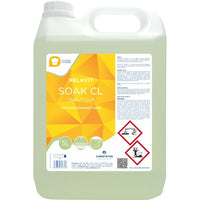
Auto commercial dishwasher liquids are essential to the smooth operation of professional kitchens, where cleanliness, hygiene, and efficiency are critical. Unlike domestic dishwashing, commercial warewashing relies on a coordinated system of specialised chemicals working together rather than a single product. These include detergents, rinse aids, glasswash chemicals, renovators, and descalers, each playing a distinct role in delivering spotless, hygienic results while protecting both equipment and tableware.
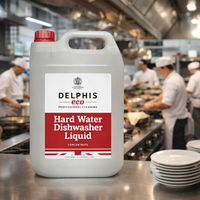
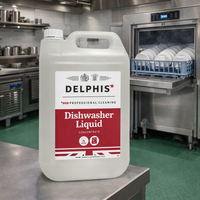
Detergents form the foundation of the cleaning process. They are responsible for removing grease, fats, proteins, and food residues from dishes, cutlery, and cookware. Typically alkaline in nature, they contain surfactants to break down grease, builders to enhance cleaning efficiency, and sequestrants to control minerals in the water. In commercial environments, detergents are often tailored to specific conditions, such as hard water formulations that include scale inhibitors or chlorinated versions designed to tackle stubborn stains and improve hygiene. The effectiveness of a detergent depends on factors such as water hardness, soil load, and machine type, and incorrect dosing can lead to poor cleaning results, increased costs, or even damage to equipment.
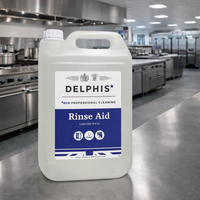
Rinse aids are used during the final stage of the wash cycle and are essential for achieving a professional finish. Rather than cleaning, they reduce the surface tension of water, allowing it to sheet off surfaces instead of forming droplets. This prevents spotting and streaking, particularly in hard water areas where minerals can leave visible marks. Rinse aids also accelerate drying, reducing the need for manual polishing and improving turnaround times in busy kitchens. Without a rinse aid, even well-cleaned items can appear dull or spotted, negatively affecting presentation.
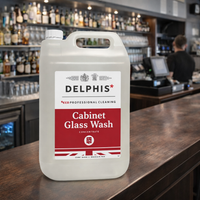
Glasswash chemicals are specifically designed for delicate glassware such as drinking glasses and bar equipment. Glass requires a different approach because it is more susceptible to clouding, etching, and residue build-up. These products typically have lower alkalinity to protect the integrity of the glass while still removing contaminants such as lipstick, proteins, and tannins from beverages. They are commonly used in bars, restaurants, and hospitality venues where the appearance of glassware directly impacts customer perception. Proper glasswashing ensures clarity, sparkle, and a hygienic finish without damage.
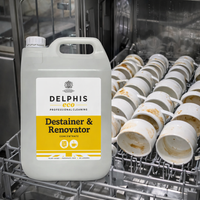
Renovators, also known as destainers or restorers, are used periodically rather than in every wash cycle. Their purpose is to remove accumulated stains and residues that regular detergents cannot fully eliminate over time. This includes tannin stains from tea and coffee, protein build-up, and general dullness or greying of crockery. Renovators are often oxygen-based or chlorine-based and are used either in a soak or as part of a dedicated wash cycle. They help restore items to a like-new condition, improving presentation and maintaining high standards of cleanliness in environments where visual quality is important.
Descalers play a vital role in maintaining both the dishwasher and the quality of the wash. In areas with hard water, minerals such as calcium and magnesium can build up inside the machine and on dishware, forming limescale deposits. These deposits can block spray arms, reduce heating efficiency, and lead to poor cleaning results, including white residues on dishes. Descalers are acidic formulations that break down these mineral deposits and are typically used as part of a regular maintenance routine. Consistent descaling helps extend the lifespan of the equipment, ensures optimal performance, and prevents costly repairs.
All of these chemicals work together within a commercial dishwasher system. During the wash phase, detergent removes grease and soil from items. In the rinse phase, rinse aid ensures water runs off cleanly, leaving a streak-free finish. Periodically, descalers are used to remove mineral build-up within the machine, while renovators restore the appearance of crockery and cutlery. Most modern systems use automatic dosing equipment to deliver precise amounts of each chemical, ensuring consistent results and minimising waste.
Selecting the right combination of chemicals depends on several factors, including water hardness, the type of dishwasher, the nature of the load, and environmental considerations. Hard water requires products with strong scale control, while delicate items such as glassware benefit from specialised formulations. Increasingly, businesses are also choosing environmentally responsible products that are biodegradable, phosphate-free, and made from plant-based ingredients, balanci