








Sanitiser Standards Explained: EN 1276, EN 13697, EN 13623, EN 14476, EN 1650 & EN 13704
Walk down any cleaning aisle or browse professional hygiene products, and you’ll quickly notice labels like EN 1276 or EN 14476. While they may sound technical, these standards play a vital role in helping you choose the right cleaning products and sanitisers for your needs.
In the UK, these EN standards are part of European testing systems designed to ensure that disinfectants and sanitisers are proven to work against specific types of microorganisms. Rather than relying on vague claims like “kills germs,” these certifications clearly show what a product is effective against—and where it should be used.
For businesses and households alike, understanding these standards is key to maintaining high levels of hygiene, infection control, and surface disinfection.
Why Sanitiser Standards Matter
Not all germs are the same. Bacteria, viruses, fungi, and spores each require different approaches to eliminate them effectively. A sanitiser that works well on kitchen bacteria may not be suitable for virus control, mould removal, or more resistant microorganisms like spores.
That’s why EN standards are so important. They provide independent, repeatable testing under controlled conditions, ensuring that cleaning products perform as expected in real-world environments.
Whether you’re managing a commercial kitchen, healthcare facility, or simply cleaning at home, choosing products that meet recognised standards helps guarantee safe and effective hygiene practices.
EN 1276: Antibacterial Sanitiser for Everyday Hygiene
EN 1276 is one of the most widely recognised standards for antibacterial cleaning products in the UK. It confirms that a sanitiser can effectively kill common bacteria such as E. coli, Salmonella, and Listeria.
This test is carried out in a liquid solution, meaning it measures how well a product performs when diluted or used in ideal conditions. Because of this, EN 1276 is considered a baseline hygiene standard.
You’ll commonly find EN 1276-certified products used in:
- Domestic kitchens
- Restaurants and catering environments
- Schools and workplaces
For everyday cleaning and food-safe environments, EN 1276 provides reliable antibacterial protection.
EN 13697: Surface Disinfection You Can Rely On
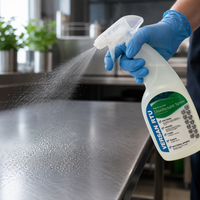
While EN 1276 proves effectiveness in theory, EN 13697 tests how a disinfectant performs on real surfaces such as stainless steel, plastic, and worktops.
This makes it far more representative of real-life cleaning conditions, as it includes drying times and contact periods. The standard primarily targets bacteria but can also include fungi depending on the product.
EN 13697 is widely used in:
- Healthcare and medical settings
- Commercial and industrial cleaning
- Public spaces and high-traffic areas
For professional cleaning, this standard is essential as it demonstrates proven surface disinfection performance.
EN 13623: Legionella Control in Water Systems
EN 13623 focuses on the effectiveness of disinfectants against Legionella pneumophila, the bacteria responsible for Legionnaires’ disease.
Unlike general surface or suspension tests, this standard is specifically designed for water-based systems, making it highly relevant for environments where water hygiene is critical.
EN 13623 is particularly important in:
- Healthcare facilities and hospitals
- Hotels and leisure centres
- Cooling towers and water systems
- Showers, spas, and plumbing networks
Because Legionella bacteria thrive in warm water systems, using products tested to EN 13623 helps reduce the risk of contamination and ensures safer water hygiene management.
EN 14476: Virucidal Sanitiser for Infection Control
When it comes to viruses, not all disinfectants are effective. EN 14476 certifies that a product can inactivate viruses, including enveloped viruses like influenza and the virus responsible for COVID-19.
This standard became especially important during the pandemic, highlighting the need for effective antiviral cleaning products in homes, workplaces, and healthcare environments.
Although EN 14476 is tested in suspension (rather than on surfaces), it remains the key benchmark for virucidal activity and is commonly used for:
- Hand sanitisers
- High-touch surface cleaning
- Healthcare infection control
If virus protection is a priority, choosing a product that meets EN 14476 is essential.
EN 1650: Fungicidal Protection Against Mould and Yeast
EN 1650 focuses on eliminating fungi, including yeasts and moulds such as Candida albicans and Aspergillus niger.
Fungal contamination is often harder to remove and thrives in damp conditions, making this standard particularly useful for:
- Bathrooms and washrooms
- Food production environments
- Damp or mould-prone areas
While not always required for general cleaning, EN 1650 is crucial when dealing with mould removal and fungal control, where standard antibacterial products may fall short.
EN 13704: Sporicidal Activity for High-Risk Environments
EN 13704 tests a disinfectant’s ability to kill bacterial spores—one of the most resistant forms of microorganisms. Spores can survive extreme conditions and are often linked to serious infections such as Clostridium difficile.
Because spores are much harder to eliminate than bacteria or viruses, this standard is particularly important in high-risk environments where deep disinfection is required.
EN 13704 is commonly used in:
- Hospitals and healthcare settings
- Laboratories and pharmaceutical environments
- Food production and hygiene-critical areas
Products that meet EN 13704 provide an added level of protection, ensuring that even the toughest microorganisms are effectively controlled.
Choosing the Right Sanitiser for Your Needs
Each EN standard serves a different purpose:
- EN 1276 – Everyday antibacterial cleaning
- EN 13697 – Proven surface disinfection
- EN 13623 – Legionella and water system control
- EN 14476 – Effective virus protection
- EN 1650 – Mould and fungal control
- EN 13704 – Sporicidal (high-level disinfection)
For the best results, many professional cleaning products meet multiple EN standards, providing broad-spectrum protection across bacteria, viruses, fungi, spores, and waterborne pathogens.
Understanding sanitiser standards doesn’t need to be complicated. These certifications are there to help you make informed decisions and ensure you’re using products that are tested, trusted, and fit for purpose.
At Click Cleaning, we supply a wide range of professional cleaning products and disinfectants that meet recognised EN standards, helping you maintain the highest levels of hygiene across any environment.
When you see those EN numbers on a label, you can be confident you’re choosing a product that delivers real, proven results.